Healthcare relies upon lots of hands that never obtain their names on the chart. Accessory instructors, clinical preceptors, simulation technologies, firm nurses filling up last‑minute shifts, and allied health and wellness instructors all shape what people in fact experience. They educate, orient, troubleshoot, and frequently end up being the initial person a nervous trainee or a short‑staffed device transforms to when something fails. When the emergency situation is a cardiac arrest, these duties quit being peripheral. They get on scene, typically in secs, anticipated to lead or to port into a group and deliver effective CPR without hesitation.
Strong scientific reactions help, yet cardiac arrest care is unforgiving. Muscles go back to habit. Group dynamics fracture if duties are uncertain. New tools have peculiarities a laid-back individual won't anticipate under tension. That is where targeted CPR training for health care adjuncts closes an extremely real skills gap, one that standard first aid courses and standard BLS classes do not completely address.
The quiet issue behind irregular resuscitation performance
Ask around any kind of hospital and you will hear versions of the same story: an apprehension on a medical flooring at 3 a.m., 3 responders that have not worked together before, an obtained defibrillator that triggers in a various tempo than the one utilized in education labs. Compressions start, stop, start once again. A person fishes for an oxygen tubing adapter. The client end result will hinge on the very first 3 mins, yet the group spends fifty percent of that time syncing to a rhythm that ought to currently be in their bones.
Adjunct professors and per‑diem staff frequently rest at the crossroads of inequality. They rotate amongst universities and facilities, toggling between lecture halls and individual rooms, or between 2 wellness systems with various screens and respiratory tract carts. They precept students who have textbook timing however limited scene management. certification in first aid Some hold wide first aid certifications yet have actually not performed compressions on a genuine breast for many years. Others are medically sharp yet unfamiliar with the precise AED version in a satellite center where they teach.
The outcome is not ignorance so much as drift. Without regular, hands‑on CPR training that prepares for the settings and equipment they actually experience, complements lose rate, not expertise. They end up being very good at every little thing around resuscitation https://ameblo.jp/jeffreydgfy660/entry-12956752251.html while the core motor abilities, cognitive sequencing, and group language come to be rusty.
Why complements need a different approach from standard first aid and BLS
General first aid training and a standard cpr course do a great task covering the essentials: scene safety and security, activation of emergency response, just how to make use of an AED, rescue breaths, and compression technique. For lay responders, that foundation is enough. For qualified service providers and educators that may step into code functions, it is not. 3 differences matter.
First, complements move across systems. The defibrillator in a community abilities lab may default to grown-up pads, while the pediatric clinic AED separates pads in different ways. A simulation facility might stock supraglottic airways students never see on the wards. Effective CPR training for this team have to include tool variability and quick‑look orientation, not just a single brand name's flow.
Second, they usually launch care prior to a code group gets here. That places a premium on decision making in the very first minute: when to begin compressions in the presence of agonal respirations, just how to assign duties when only 2 people exist, exactly how to manage the balance between compressions and airway in a monitored patient who is desaturating. Standard first aid and cpr courses do not rehearse these options at the level of realistic look accessories need.
Third, accessories educate others. Their strategy comes to be the template for trainees and brand-new hires. Negative habits echo for semesters. A cpr refresher course constructed for accessories have to coach not just the ability, however exactly how to observe the skill in others and provide succinct, rehabilitative responses while maintaining compressions going.
What capability looks like in the first 3 minutes
The most useful benchmark I have utilized with complements is simple: from acknowledgment to the third compression cycle, can you do what matters without thinking of it? That implies hands on the upper body, after that changing compressors at 2 minutes with marginal time out, while someone else preps the defibrillator and calls for help. It means recognizing when to disregard need to intubate and when to prioritize ventilation for a seen hypoxic arrest. It indicates cutting through unhelpful sound, like the well‑meaning colleague asking where the ambu bag lives, and rather indicating the oxygen port already placed behind the bed.
A few anchor numbers assist performance. Compressions should be 100 to 120 per min at a depth of about 5 to 6 centimeters on grownups, allowing full recoil. Disruptions should stay under 10 seconds. Defibrillation ideally takes place as soon as a shockable rhythm is acknowledged, with compressions resuming quickly after the shock. Complements do not need to recite these figures, they require to feel them. That sensation comes from purposeful method adjusted by objective comments, not from passively seeing a video or clicking boxes in an e‑learning module.
Building a CPR training plan that fits adjunct realities
The finest programs I have seen reward accessories not as an organizing afterthought but as an unique learner team. They blend the fundamentals of first aid and cpr with the context of scientific mentor and mobile method. While every company has constraints, a practical plan tends to include the following elements.
Day to‑day realistic look. Train on the devices accessories will really come across, not just what is stocked in the education office. If your hospital utilizes two defibrillator brand names throughout different websites, rotate both right into labs. If clinics bring portable AEDs with distinct pad positioning diagrams, technique on those devices and keep the diagrams noticeable during drills. If the simulation center stands in for a low‑resource ambulatory site, strip the room to match that reality and practice with limited gear.
Short, frequent, hands‑on blocks. Adjunct timetables are fragmented, so design cpr training around 20 to half an hour skill ruptureds installed before shift starts, between courses, or at the end of simulation days. A quarterly tempo defeats an annual cram session. A reliable first aid course section on respiratory tract monitoring can be split into two mini sessions: placing and rescue breaths one month, bag mask air flow and two‑rescuer control the next.
Role rotation with voice training. Being able to press well is one point. Having the ability to direct a hesitant pupil while keeping compressions is another. Incorporate voice manuscripts in training: "You take compressions. I will certainly take care of the airway. Switch in 2 mins on my matter." This transforms method right into group language. Videotape short clips on phones so complements can listen to whether their commands are concise or vague.
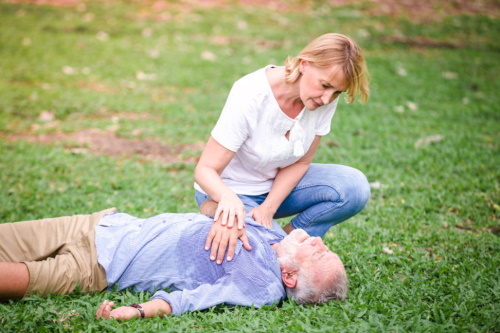
Tactical screening. Replace long composed Article source examinations with micro‑scenarios: an observed collapse in a classroom with an AED 40 steps away, a throwing up person in PACU who all of a sudden sheds pulse, a dialysis chair apprehension with limited work space. Score what in fact matters: time to very first compression, hands‑off time around defibrillation, high quality metrics from responses manikins, precision of pad placement, and the clearness of role assignment.
Stackable credentials. Numerous accessories need a first aid certificate to satisfy employment plans, and a BLS or equal card to operate in medical locations. Partner with a company that can layer a cpr refresher course concentrated on adjunct teaching functions on top of these, preferably within the very same day or via a two‑part sequence. Some companies use First Aid Pro design combined understanding: online prework complied with by a high‑intensity practical.
Where first aid training enhances CPR for adjuncts
Cardiac apprehension does not travel alone. Complements in outpatient settings might face anaphylaxis, hypoglycemia, choking, seizures, or injury while walking in between buildings. A strong first aid training slate covers these with enough deepness to manage the very first 5 minutes. In practice, this means lining up first aid content with one of the most likely emergency situations in each setting and rehearsing them with the very same no‑nonsense cadence as CPR.
I have viewed a breathing accessory maintain a pupil with extreme allergic reaction by delegating epinephrine management to a coworker while she kept eyes on respiratory tract patency and timing. That only occurred efficiently because their previous first aid and cpr course had actually incorporated the sequence, not treated them as separate silos. Any curriculum for complements should entwine these subjects with each other: compressions that roll right into post‑arrest care with glucose checks or airway suction as needed, anaphylaxis monitoring that consists of instant recognition of upcoming apprehension, and choking drills that do not stop at expulsion however continue right into CPR if the person comes to be unresponsive.
Feedback innovation is helpful, not a crutch
CPR manikins with feedback make a noticeable difference in retention. Devices that report compression depth, recoil, and rate let accessories adjust their muscle mass memory versus unbiased targets. That stated, overreliance creates its very own unseen area. Actual clients do not beep to validate depth. Excellent teachers instruct accessories to couple feedback device mentoring with analog hints: the springtime rebound under the heel of the hand, counting out loud to preserve tempo, looking for breast increase as opposed to going after a number on a screen.
In one complement refresh day, we split the room into 2 halves. One practiced with complete feedback and metronome tones. The various other made use of basic manikins and discovered to establish the speed by singing a track at the appropriate beat in their heads. We switched midway. The crossover result was striking. Those originating from tech‑guided practice instantly understood their intrinsic rhythm, and those educated by feel made use of the later comments to tweak deepness. For mobile teachers who teach in spaces without high‑end manikins, that sort of versatility matters.
Common challenges and exactly how to deal with them
Even skilled medical professionals fall under the very same catches when technique slides. I see 5 repeating mistakes throughout accessory sessions.
- Drifting compression price. Anxiety presses individuals to quicken or reduce. The repair is to count out loud in collections that match 100 to 120 per min and to switch over compressors before fatigue deteriorates depth. Long pre‑shock stops. Teams occasionally stop to "prepare" or narrate. Training should emphasize that analysis and billing can happen while compressions continue, with a final brief pause just to supply the shock. Hands wandering off the lower fifty percent of the breast bone. As sweat develops and exhaustion embed in, hand placement moves. Noting setting visually during training, and using quick companion checks every 30 secs, maintains positioning consistent. Overprioritizing air passage early. Specifically amongst accessories from airway‑heavy disciplines, there is a temptation to grab devices prematurely. Clear duty project and timed checkpoints aid maintain compressions at the center. Vague management language. Phrases like "Someone phone call" or "We must switch" waste secs. Practice direct declarations with names and activities: "Alex, call the code and bring the AED. Jordan, take control of compressions on my matter."
Legal, credentialing, and plan angles complements can not ignore
Adjuncts sit in a triangular of responsibility: their home company, the host facility or university, and the students or individuals they serve. That triangular influences cpr training in methods clinicians embedded in a solitary team could overlook.
Credential validity. Track the exact flavor of your first aid and cpr courses that each website accepts. Some insist on a specific providing body. Others accept any recognized cpr training. Maintaining a shared tracker prevents last‑minute shocks when organizing clinicals or mentor labs.
Scope of method. In academic setups, adjuncts may manage students whose range is narrower than their own license. During an arrest scenario in a lab, be explicit concerning what trainees can perform and what stays with the teacher. In real occasions on university, know the limit in between immediate first aid and turning on EMS, specifically in non‑clinical buildings.

Incident paperwork. If a genuine arrest happens during training tasks, facilities frequently require double paperwork: a clinical record entrance and an academic event report. Training must consist of exactly how to capture timing, interventions, and changes of treatment without slowing down the response.
Equipment stewardship. Accessories that float between labs and facilities ought to develop a routine of quick AED and emergency situation cart checks when they get here, comparable to a pilot's preflight walk‑around. Batteries, pad expiration, oxygen cylinder stress, and bag mask completeness are tiny checks that protect against large delays.
Budget and scheduling restraints, taken care of with a teacher's mindset
Training time is cash, and complement hours are frequently paid by the section. Programs still succeed when they value that truth. An education department I worked with used two layouts: a half‑day cpr correspondence course with abilities stations and scenario work, and a "drip" design where complements went to 3 half an hour sessions within a six week home window. Conclusion of either approved the same first aid certificate upgrade if required, and kept their cpr course currency. Participation jumped as soon as the drip design launched, in part because accessories can tuck a session between courses or professional rounds.
Cost can be bridged by shared sources. Companion throughout divisions to buy a little collection of responses manikins and a few AED fitness instructors that resemble the brand names in operation. Turn kits in between universities. If you deal with an exterior supplier like First Aid Pro or a similar organization, work out for onsite sessions gathered on days accessories already collect for professors meetings. The even more the training rests where the job takes place, the much less it feels like an add‑on.
Teaching the educators: offering feedback without eliminating momentum
Adjuncts invest much of their time observing students. The method during resuscitation training is to deliver micro‑feedback that adjustments performance in the minute, without derailing the flow of compressions. This is a learnable skill. Practice it explicitly.

A valuable pattern is observe, support, push. As an example: "Your hands are 2 centimeters also reduced. Move to the facility of the sternum currently." Or, "Your price is drifting. Suit my count." If a pupil stops also lengthy to connect pads, the complement can claim, "I will certainly do pads. You maintain compressions going," then demonstrate the very little disturbance strategy of using pads from the side.
After the circumstance finishes, switch to debrief setting. Maintain it details and short. Evaluate where possible: "Hands‑off time was 14 seconds before the shock. Let's target under 10. Attempt charging earlier following cycle." Invite the pupil to voice what they really felt, then replay just the segment that went wrong. Repeating seals learning more effectively than a lengthy lecture about it.
Rural and resource‑limited setups have distinct needs
Not every accessory instructs near a code group. In rural facilities and area schools, the nearest crash cart might be miles away. AEDs could be the only defibrillation offered. Materials originate from a single closet rather than a cart with drawers identified by shade. In these settings, CPR training need to stress improvisation secured to core principles.
Rehearse with what exists. If the facility's ambu bag only has one mask size, method two‑hand seals with jaw thrust to make up for imperfect fit. If oxygen needs a wall secret, keep one on the AED manage and include that step in the drill. If the space is small, strategy who moves where when EMS arrives. Draw up precisely who satisfies the rescue at the front door and who remains with compressions. None of this is advanced medicine, yet it prevents chaotic scrambles.
Measuring whether the bridge is holding
Programs occasionally state success after the last certificate prints. That is the begin, not the end result. You recognize you are shutting the gap when 3 things appear in the information and the culture.
First, objective skill metrics boost and hold in between renewals. Feedback manikin data for compression deepness and price should reveal a tighter variety and fewer outliers. Hands‑off time throughout situation defibrillation actions should shrink across cohorts.
Second, cross‑site familiarity grows. Adjuncts report comfort with numerous AED and defibrillator designs. When turning in between schools, they do not require an equipment briefing to start compressions or deliver a shock.
Third, real‑world actions look calmer. Event reviews note much faster function task, fewer synchronised talkers, and quicker changes through the first two mins. Trainees and personnel describe accessories as consistent anchors instead of just additional hands.
A sample adjunct‑focused CPR abilities lab
If you are going back to square one, this summary has actually worked well at mid‑size systems. It fits into two hours, stands alone as a cpr correspondence course, and pairs easily with a first aid and cpr course on a various day for complete certification maintenance.
- Warm up: two mins of compressions per individual on comments manikins, adjust depth and price by necessity, no coaching yet. Device turning: 4 five‑minute terminals with different AED or defibrillator instructors, consisting of at the very least one compact AED and one complete screen defibrillator. Jobs concentrate on pad placement speed and minimizing hands‑off time. Micro situations: three rounds of 90 second drills. Instances consist of collapse in a class, checked patient with pulseless VT, and a pediatric apprehension configuration with a manikin and kid pads. Each drill scores time to very first compression and time to shock when indicated. Teaching practice: sets take turns as student and accessory. The adjunct's job is to provide one piece of in‑flow feedback that immediately improves the student's efficiency without quiting compressions. Debrief and behavior preparation: everybody composes a 1 month plan for two micro‑practices, such as 2 minutes of compressions at the beginning of each simulation change and a regular AED examine arrival at a satellite site.
This framework values attention spans, refines the very first couple of mins of reaction, and constructs the complement's voice as both rescuer and instructor.
The human side: what experience teaches you to expect
Some lessons I have actually found out by standing in areas with falling vitals and nervous faces:
You will never ever regret starting compressions one beat early. The damage of a 5 second unnecessary compression on an individual with a pulse is tiny contrasted to the damage of waiting five secs too long when they do not. Train accessories to act, after that reassess, not the reverse.
Teams take your temperature. If your voice reduces and your words obtain much shorter, everybody else's shoulders drop also. CPR training that includes singing technique is not fluff. It is a tool for emotional regulation.
Students bear in mind one expression. In the middle of their first genuine code, they will certainly recall a clean, repeated line from training more than a paragraph of pathophysiology. Select your line. Mine is, "Compress, cost, shock, compress."
Equipment betrays. Pads peel severely, batteries review half complete, the bag mask has no valve. That is not your mistake, however it is your problem in the minute. The practice of a 30 second arrival check repays a hundredfold.
Fatigue exists. People insist they can end up an additional cycle when their compression depth has currently discolored by a centimeter. Stabilize switching very early and often. No person gains factors for heroics in CPR.
Bringing all of it together
Bridging the CPR skills gap for medical care complements is not a grand redesign. It is a collection of based choices that value how complements function: constant brief practices instead of unusual marathons, gadgets they in fact touch rather than idealized devices, voice manuscripts and duty clarity as opposed to generic teamwork mottos. Pair that with first aid courses that dovetail right into heart treatment, and you create -responders who are consistent throughout places and confident under pressure.
Investing in adjunct‑focused cpr training repays twice. Patients and learners get more secure treatment in the mins that matter most, and adjuncts carry a quieter mind into every shift, recognizing that when the room tilts, their hands and words will certainly find the best rhythm.